Export Insights
Lady Rosetta vs Other Processing Potatoes | India Guide
Explore the key characteristics used to compare Lady Rosetta with other processing potato varieties for chips, crisps and food-processing applications.
Lady Rosetta vs Other Processing Potato Varieties: What Buyers Should Know
Choosing a potato variety for food processing is an important procurement decision. Different varieties can behave differently during preparation, slicing, frying and storage, so the most suitable variety depends on the manufacturer's production process and product requirements.
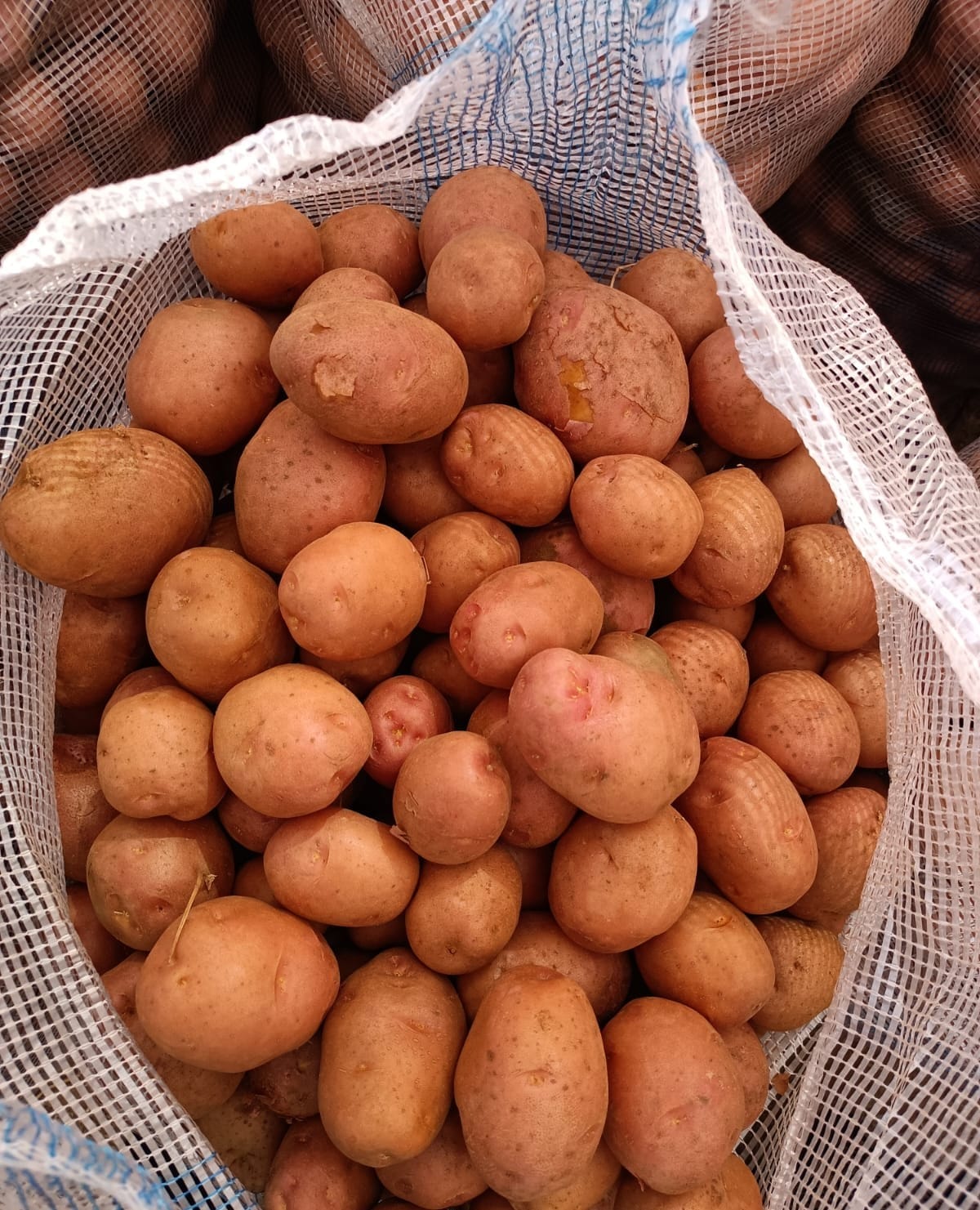
Lady Rosetta, also known as LR Potato, is a processing-oriented variety associated with applications such as potato chips and crisps.
However, it is not enough to compare potato varieties simply by name. Commercial buyers should evaluate each variety according to measurable characteristics such as dry matter, reducing sugar, size, shape, uniformity, storage behaviour, processing performance and availability.
PATEL AGRO SPICES EXPORT supplies Lady Rosetta Potato from Gujarat, India, for food processors, importers, distributors and other commercial buyers.
Why Do Potato Varieties Matter in Food Processing?
Potato varieties are developed with different characteristics, and those characteristics can affect their suitability for particular applications.
Depending on the variety and crop, buyers may evaluate:
Dry matter
Reducing sugar
Tuber size
Tuber shape
Uniformity
Maturity
Storage behaviour
Frying characteristics
Physical quality
Crop availability
For example, the requirements for potato chips may differ from those for French fries or other processed potato products.
Therefore, a variety that works well for one application may not necessarily meet the specification of another manufacturer.
What Is Lady Rosetta Potato?
Lady Rosetta is commonly associated with potato-chip and crisp production.
For commercial procurement, buyers may evaluate Lady Rosetta according to:
Size and calibration
Dry matter
Reducing sugar
Shape and uniformity
External quality
Internal quality
Frying performance
Storage condition
Crop availability
The actual characteristics of a commercial lot can vary according to growing conditions, maturity, harvest timing, storage and other factors.
This is why buyers should evaluate the specific lot or agreed specification, rather than relying only on the variety name.
Lady Rosetta vs Other Processing Potato Varieties
There is no universal specification that makes one processing variety suitable for every manufacturer.
A practical comparison should instead look at how each variety and commercial lot meets the buyer's requirements.
Parameter Lady Rosetta Other Processing Varieties
Processing use Commonly associated with chips and crisps Depends on the variety
Dry matter Should be evaluated against buyer specification Depends on variety and crop
Reducing sugar Important for frying applications Important for frying applications
Size Buyer-specific calibration Buyer-specific calibration
Shape Evaluate according to processing requirements Depends on variety
Frying performance Should be validated for the intended process Should be validated for the intended process
Storage behaviour Consider crop and storage conditions Depends on variety and storage conditions
Availability Depends on crop, season and market Depends on region, crop and variety
Grading According to agreed specification According to agreed specification
Packing Commercial or customized Commercial or customized
This table is a procurement framework, not a ranking of varieties.
1. Compare the Intended Processing Application
The first question should be:
What product will the potato be used to manufacture?
Possible applications include:
Potato chips
Crisps
French fries
Frozen potato products
Dehydrated products
Other processed potato foods
Different products can require different combinations of raw-material characteristics.
A buyer should therefore start with the requirements of the production line and finished product.
2. Compare Dry Matter
Dry matter is an important parameter for many processing applications.
It can influence characteristics such as:
Processing yield
Texture
Crispness
Frying behaviour
Oil uptake
When comparing Lady Rosetta with another variety, buyers should compare the measured or agreed dry-matter specification rather than assuming that the variety name alone determines processing performance.
3. Compare Reducing Sugar
Reducing sugar is particularly relevant to fried potato products.
During frying, reducing sugars can contribute to browning reactions and influence the colour of the finished product.
For this reason, manufacturers may establish acceptable reducing-sugar limits for their raw material.
When comparing varieties, buyers should consider both the variety's characteristics and the condition of the actual crop, including maturity and storage history.
4. Compare Potato Size and Uniformity
Size can influence slicing and processing efficiency.
Manufacturers may require a defined calibration, such as:
45–55 mm
45–65 mm
55–65 mm
65 mm+
Another buyer-specific range
These ranges are examples rather than universal industry standards.
The appropriate size depends on the manufacturer's equipment, cutting system and finished-product requirements.
5. Compare Shape
Shape can also be relevant to processing.
Depending on the equipment and product, buyers may consider:
Tuber shape
Length
Width
Regularity
Surface condition
Uniformity
A processor should evaluate shape according to its own slicing and handling system.
6. Consider Storage Behaviour
Storage can affect the processing characteristics of potatoes.
Changes during storage can influence parameters such as reducing sugar and therefore frying performance.
When comparing varieties, buyers should consider:
Harvest date
Storage duration
Storage conditions
Current stock age
Expected delivery period
This is particularly important when potatoes are being purchased outside the immediate harvest period.
7. Consider Physical and Internal Quality
Technical specifications should also address the physical condition of the potatoes.
Buyers may evaluate:
Bruising
Cuts
Green coloration
Sprouting
Rot
Disease
Mechanical damage
Internal defects
Excessive dirt
The acceptable tolerance should be agreed between the buyer and supplier before shipment.
8. Compare Availability and Supply Consistency
Technical suitability is only one part of commercial procurement.
A variety may meet a manufacturer's technical requirements, but the buyer also needs to consider whether the required quantity can be supplied when needed.
Important questions include:
Is the variety currently available?
What quantity can be supplied?
Which size grades are available?
When was the crop harvested?
Is the product fresh or stored?
Can repeat shipments be arranged?
What is the expected delivery schedule?
For large processing operations, supply planning can be just as important as the initial product specification.
9. Compare the Actual Commercial Lot
One of the most important principles in agricultural procurement is that variety does not equal a guaranteed specification.
Two lots of the same variety can differ because of:
Growing conditions
Soil
Weather
Irrigation
Maturity
Harvest timing
Storage
Handling
Therefore, buyers should compare the actual commercial lot against the agreed specification wherever practical.
For new supplier relationships, a sample or trial shipment may also be considered before establishing regular commercial supply.
Lady Rosetta for Potato Chips
Lady Rosetta is associated with processing applications including potato chips and crisps.
A manufacturer considering Lady Rosetta should evaluate whether the available product meets its requirements for:
Size + Dry Matter + Reducing Sugar + Quality + Processing Performance + Supply Availability
The final decision should be based on the manufacturer's own process and acceptance criteria.
Lady Rosetta Potato from Gujarat, India
Gujarat is an important agricultural region for commercial potato sourcing in India.
North Gujarat, including the broader Deesa and Banaskantha region, is associated with potato cultivation and commercial agricultural supply networks.
For buyers sourcing Lady Rosetta from Gujarat, availability can depend on:
Crop season
Current harvest
Size requirement
Quality specification
Quantity
Storage
Delivery schedule
PATEL AGRO SPICES EXPORT sources Lady Rosetta Potato from Gujarat and coordinates commercial supply according to buyer requirements.
How Should International Buyers Compare Suppliers?
When evaluating suppliers, buyers should look beyond the quoted price and consider the complete commercial specification.
Important factors can include:
Variety confirmation
Size grading
Quality specification
Dry-matter requirements
Reducing-sugar requirements
Defect tolerance
Packing
Quantity availability
Crop information
Storage information
Export documentation
Shipment planning
Communication
Commercial terms
For processing companies, a clear specification can reduce misunderstandings between the buyer and supplier.
Questions to Ask Before Purchasing
Before comparing Lady Rosetta with another processing variety, a buyer can ask:
What variety is being supplied?
What size range is available?
What is the agreed quality specification?
Is dry-matter information available?
Is reducing-sugar testing required?
When was the crop harvested?
Has the product been stored?
What quantity is currently available?
What packing options are available?
Can a sample or trial lot be evaluated?
What documentation is available for export?
What shipment schedule can be supported?
Lady Rosetta Potato Supplier from Gujarat
PATEL AGRO SPICES EXPORT supplies Lady Rosetta Potato from Gujarat, India, for:
Potato-chip manufacturers
Food-processing companies
Importers
Distributors
Wholesalers
Commercial agricultural buyers
Supply can be discussed according to the buyer's required variety, size, quality, quantity, packing and destination.
Request Lady Rosetta Potato from India
If you are evaluating Lady Rosetta Potato against other processing varieties, send us your requirements so that the available product can be discussed against your procurement specification.
Please provide:
Variety + Application + Size + Quantity + Quality Specification + Packing + Destination
PATEL AGRO SPICES EXPORT
Gujarat, India
Website: www.patelagrospicesexport.com
Email: sales@patelagrospicesexport.com
WhatsApp: +91 9427725873
Conclusion
Lady Rosetta is a processing-oriented potato variety associated with applications such as chips and crisps, but choosing a processing potato should not be based on variety name alone.
International buyers should compare dry matter, reducing sugar, size, shape, uniformity, physical quality, storage condition, processing performance and supply availability against their own manufacturing requirements.
The most useful comparison is therefore not simply “Lady Rosetta vs another variety.” It is:
Which available potato lot meets the manufacturer's technical specification, quality requirements and supply schedule?
For commercial buyers sourcing Lady Rosetta Potato from Gujarat, India, PATEL AGRO SPICES EXPORT can discuss available sizes, quantities, packing and specifications according to the intended application and destination.